Mail Merge Many-to-One: Combine Rows into One Email
Send one email per recipient that combines multiple spreadsheet rows into a single table. Here's how to set up a many-to-one mail merge in Outlook.
Available as a video tutorial
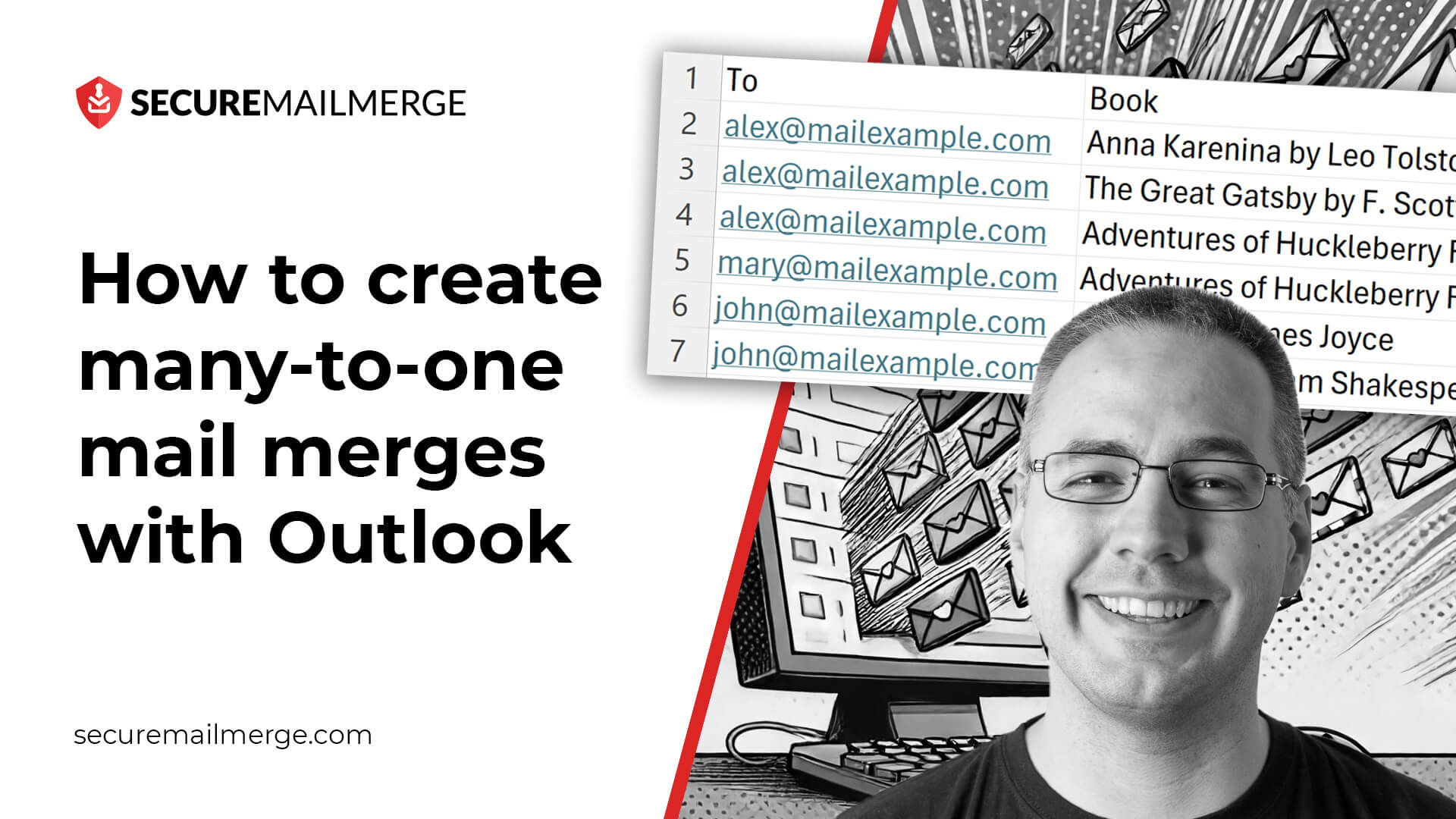
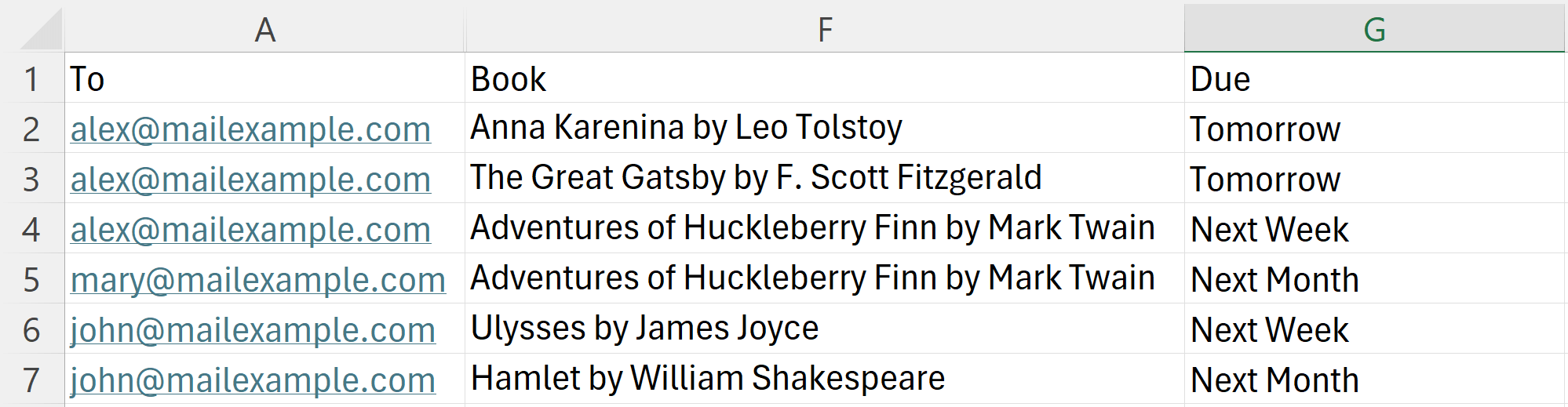
Step 1. Make sure the “To” column in your spreadsheet is identical for all rows you want to group.
Use one row per item, with the same recipient address in the “To” column for every item that belongs in that person’s email. Put column headers in the first row. For example:
| To | Book | Due |
|---|---|---|
| [email protected] | The Secret Garden | 12 October 2026 |
| [email protected] | Little Women | 14 October 2026 |
| [email protected] | Treasure Island | 15 October 2026 |
Anna will receive one email containing two table rows. Ben will receive one email containing one row. Attachments are optional, not a requirement for many-to-one mode. Curious about why Word can’t merge multiple rows into one email? The knowledge guide explains it.
Step 2. Start a mail merge and upload your spreadsheet
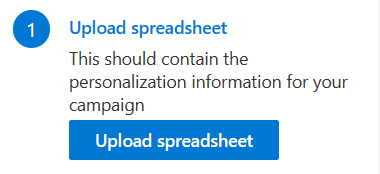
Assuming you have installed SecureMailMerge and started the plugin from the Apps menu, you will see the following screen. Click the “Upload Spreadsheet” button and then select your spreadsheet file from your hard disk.
Step 3. Activate “many-to-one” mode
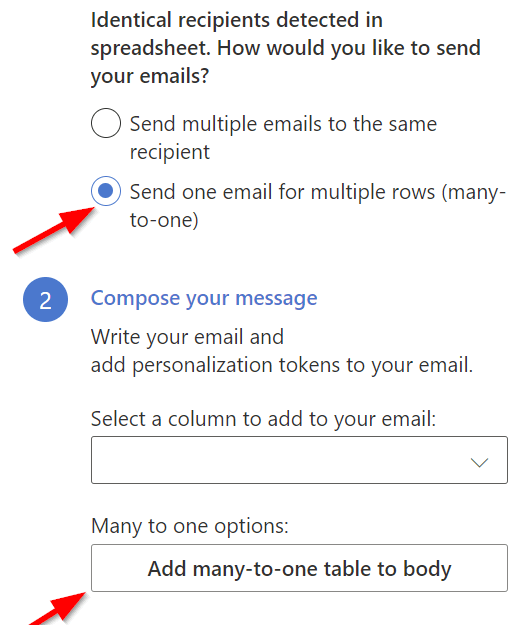
If there are multiple rows in your spreadsheet with the same email recipient then a message will appear asking you if you would like to send a traditional mail merge or a many-to-one mail merge.
In traditional mail merge mode, each row will be sent as a separate email. In many-to-one mode, all rows with the same email recipient will be grouped together and sent as a single email.
Select “Send one email for multiple rows (many-to-one)”. The “Add many-to-one table to body” button appears under “Compose your message”.
Step 4. Insert the table into your message
Write your email in Outlook and place the cursor where the table should appear. Select “Add many-to-one table to body” in the add-in.
Tick the columns you want recipients to see, for example “Book” and “Due”. Select them in the order you want them to appear. Leave “To” unticked unless the address should be shown in the table. Then select “Add table to Body” and “Return to campaign settings”.
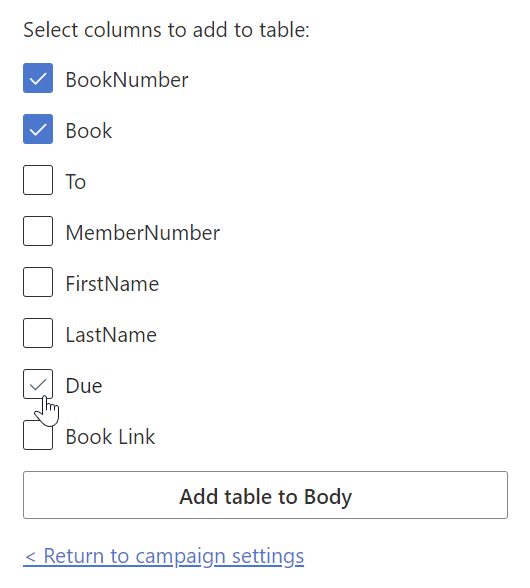
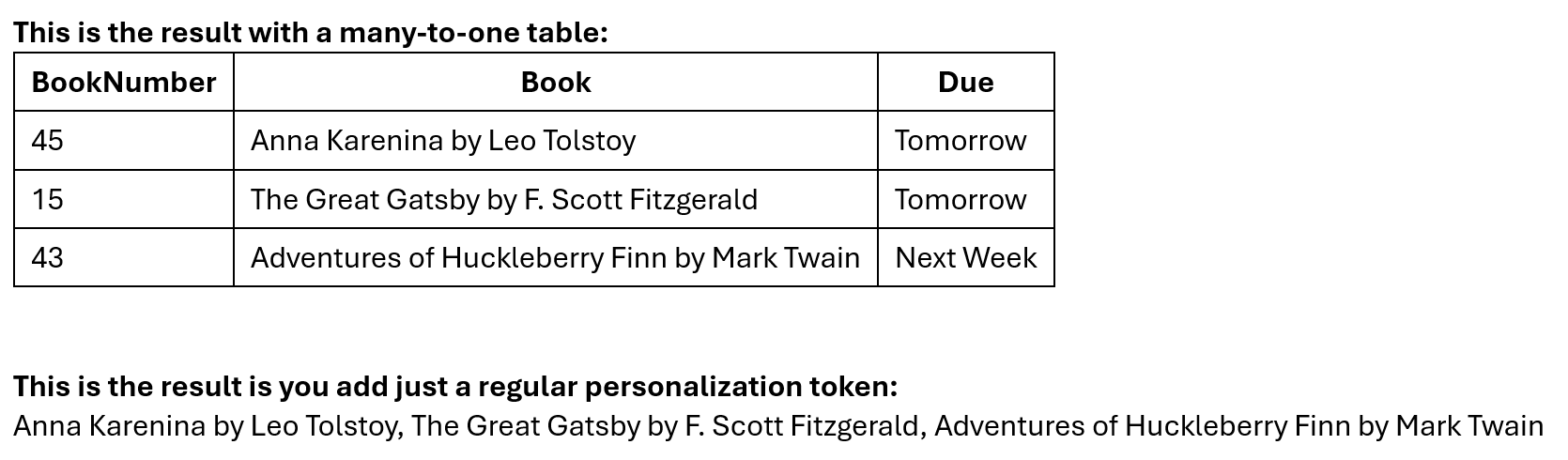
The add-in inserts a table token into your email. When the message is merged, it becomes a table containing that recipient’s rows.
Using ordinary tokens instead of a table
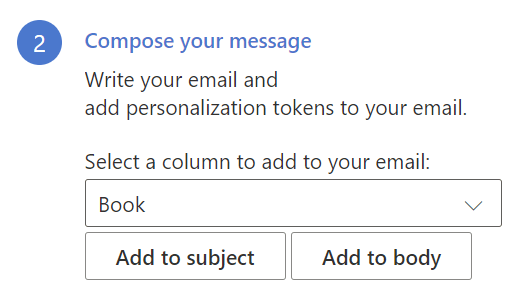
If you insert a regular personalization token (in many-to-one mode) instead of a many-to-one table, values from all rows will be inserted as one long text separated by commas, except for the special columns “Attachments”, “CC”, and “BCC”, which will be combined intelligently (see the next section).
Special note: Combining attachments, CC, and BCC across multiple rows
When using many-to-one mode, SecureMailMerge intelligently combines certain columns across all rows belonging to the same recipient:
- Attachments: All unique attachments from every row are combined into a single email
- CC recipients: All unique CC email addresses are merged together
- BCC recipients: All unique BCC email addresses are merged together
This means you can organize your spreadsheet with multiple rows per recipient, each containing different attachments or CC/BCC recipients, and SecureMailMerge will automatically combine them.
Example: Multiple attachments per recipient
| To                | Attachments           | CC              |
|-------------------|-----------------------|-----------------|
| [email protected]  | contract.pdf          | [email protected]  |
| [email protected]  | invoice.pdf           | [email protected]|
| [email protected] | terms.pdf | |Result: John receives one email with all three attachments (contract.pdf, invoice.pdf, terms.pdf) and both CC recipients ([email protected], [email protected]).
Automatic deduplication
If the same attachment or email address appears in multiple rows, it will only be included once in the final email.
When is many-to-one mode offered?
Many-to-one mode is offered on the main campaign screen, and only when duplicate recipient email addresses are detected in your spreadsheet. When that happens, SecureMailMerge asks how you would like to send your emails and you can choose “Send one email for multiple rows (many-to-one)”.
If every recipient in your spreadsheet is unique, the choice does not appear and there is no way to turn many-to-one on, including from the advanced options. To use the {% table %} tag, your spreadsheet needs at least one recipient address that appears on more than one row.
Step 5. Send a test email and then send the campaign
You can then proceed by sending a test email, to check your personalization tokens are working as expected.
The test email uses the first recipient
Note that the test email uses the recipient in the first data row (the first row under the header row), including all of that recipient’s rows. You will only see the many-to-one features if that recipient has multiple rows assigned.
When you’re happy, you can send the campaign to all recipients.
When the campaign finishes, download the send report before starting another campaign. It keeps one row per original spreadsheet row, even when several rows formed one email.
→ Click here for more help on other use cases (e.g. multiple CC/BCC, personalized attachments etc).
Need more help?
Email support with what you were trying to do, what happened and the exact error message. Do not include real recipient data.